
June 2, 2026
Veneers for Worn or Chipped Teeth: When Restorative Dentistry Meets Cosmetic Design
Comprehensive dental care in Bellaire and Houston: preventive, restorative, cosmetic, and biological dentistry for families and individuals.
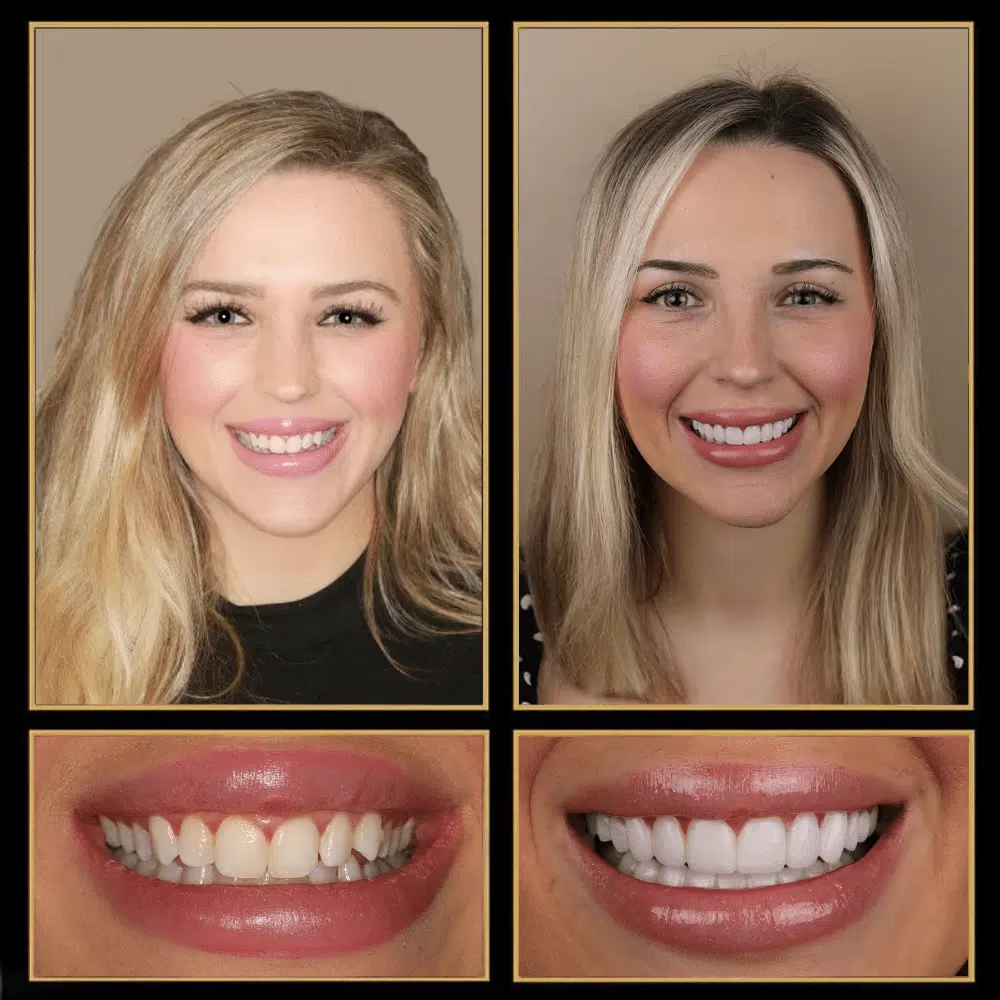
Worn or chipped teeth affect both appearance and function. Porcelain veneers offer a solution that restores lost tooth structure while improving smile aesthetics. Unlike composite bonding which adds material directly, veneers provide a durable ceramic surface that resists further wear. This article examines when veneers are appropriate for worn or chipped teeth, how they compare to other restorative options, and what clinical evidence shows about long term outcomes.
Table of Contents
Key Takeaways (TL;DR)
- Veneers restore lost tooth structure: Porcelain replaces worn enamel and protects against future attrition, erosion, and abrasion.
- Mild to moderate wear responds well to veneers: Teeth with 1 to 3 millimeters of incisal edge loss are ideal candidates.
- Underlying causes must be controlled first: Bruxism requires a nightguard. Acid reflux or dietary erosion needs medical or behavioral management.
- Veneers outperform composite for worn teeth: Clinical studies show higher survival rates and better resistance to continued wear compared to direct bonding.
- Full coverage crowns may still be needed: Severely worn teeth with structural compromise require crowns rather than veneers.
What Causes Teeth to Become Worn or Chipped?
Tooth wear occurs through several distinct mechanisms. Identifying the cause is essential before treatment because veneers will fail if the underlying process continues uncontrolled.
Types of Tooth Wear
- Attrition: Tooth to tooth contact from grinding or clenching (bruxism). This creates flat, polished wear facets on incisal edges and occlusal surfaces.
- Erosion: Chemical dissolution from acid exposure. Sources include gastric reflux, frequent vomiting, bulimia, or high consumption of acidic foods and drinks (citrus, soda, wine).
- Abrasion: Physical wear from external sources such as aggressive brushing, holding objects between teeth, or abrasive toothpaste.
- Abfraction: Flexural forces that cause microfractures at the gum line, often from bruxism combined with normal chewing.
- Trauma: Acute injury from falls, sports impacts, or accidental biting of hard objects causing chips or fractures.
Assessing Severity
Dentists classify wear by the amount of tooth structure lost. Mild wear shows flattened incisal edges but normal tooth height. Moderate wear reduces tooth height by 1 to 3 millimeters. Severe wear reduces height by more than 3 millimeters and may expose dentin. Veneers work best for mild to moderate wear where sufficient enamel remains for bonding.
Who Is a Good Candidate for Veneers on Worn or Chipped Teeth?
Not every worn tooth should receive veneers. Clinical selection criteria help ensure successful outcomes.
Ideal Candidate Characteristics
- Mild to moderate wear limited to the incisal edge (1 to 3 millimeters of tooth loss)
- Sufficient remaining enamel thickness (at least 0.5 millimeters) for bonding
- Underlying cause of wear identified and controlled (nightguard in place, reflux managed)
- No active decay or gum disease
- Healthy tooth pulp without symptoms of irreversible pulpitis
- Realistic expectations about veneer longevity with continued parafunctional habits
When Veneers Are Not Appropriate
- Severe wear exceeding 3 millimeters: Insufficient enamel for bonding. Crowns provide better structural support.
- Uncontrolled bruxism without nightguard compliance: Veneers will fracture or wear prematurely.
- Active acid erosion from ongoing reflux or bulimia: Stabilize the medical condition first.
- Large existing fillings or recurrent decay: Restore or consider crowns instead.
- Exposed dentin with sensitivity: The bond to dentin is weaker than to enamel. Crowns may be more predictable.
How Do Veneers Restore Worn or Chipped Teeth?
The restorative approach for worn teeth differs slightly from standard cosmetic veneer placement. The dentist must rebuild proper tooth proportions and occlusal relationships.
Diagnostic and Planning Phase
A diagnostic wax up is essential for worn teeth cases. The laboratory technician builds up the worn teeth to ideal proportions on a stone model. This reveals how much length needs to be added to each tooth. The dentist may create a mock up in the patient's mouth using composite or a temporary material so the patient can preview the new tooth length and shape before any permanent preparation.
Enamel Preparation for Worn Teeth
For worn teeth, the dentist typically prepares less enamel than for cosmetic veneers because some wear is already present. The goal is to create a uniform surface for bonding while preserving as much remaining enamel as possible. In some cases, no incisal reduction is needed because the worn edge is already short. The dentist only smooths the surface and creates a slightly feathered margin.
Adding Length Back to Teeth
The veneer extends beyond the existing worn tooth structure to restore original tooth height. The added length must be carefully designed to avoid interferences when the patient closes their mouth. The dentist checks occlusion thoroughly during the try in appointment. Bite adjustments are common after cementation once the patient can feel the new tooth position.
For a complete overview of the veneer process including timelines and material selection, refer to the porcelain veneers procedure guide.
How Do Veneers Compare to Other Options for Worn or Chipped Teeth?
| Treatment | Wear Severity Best Suited | Tooth Reduction Needed | Longevity | Resistance to Future Wear |
|---|---|---|---|---|
| Composite Bonding | Mild chips, small edge fractures | None (additive only) | 3‑7 years | Low (resin wears faster than enamel) |
| Porcelain Veneers | Mild to moderate wear (1‑3mm loss) | Minimal (0.3‑0.5mm) | 10‑15 years | High (ceramic resists wear) |
| Dental Crowns | Severe wear (>3mm loss), exposed dentin | Moderate to extensive (1.5‑2mm) | 10‑20 years | Very high |
Pricing disclaimer: Cost estimates shown are for educational and research purposes only. They do not represent actual fees or estimates of The Houston Dentists. Patients should request current fee information during a consultation.
Why Choose Veneers Over Bonding for Worn Teeth
Composite bonding wears down faster than natural enamel. On a patient with active grinding or heavy chewing forces, bonded restorations may need replacement every two to three years. Porcelain veneers resist wear significantly better. The glazed ceramic surface maintains its shape and incisal edge contour for years. For patients who have already demonstrated tooth wear, the more durable material is typically the better choice.
What Does Clinical Evidence Show About Veneers for Worn Teeth?
Research specifically examining veneers for worn teeth is more limited than studies on cosmetic veneers, but available evidence supports their use in appropriate cases.
Clinical Outcomes: Veneers on Worn Anterior Teeth
| Study | Follow‑Up Period | Success Rate | Primary Findings |
|---|---|---|---|
| Journal of Prosthetic Dentistry (2024) | 5 years | 91% | Veneers restored lost vertical dimension with minimal complications |
| Journal of Esthetic Dentistry (2025) | 8 years | 88% | Patients with bruxism and nightguards had similar success to non‑grinders |
| Clinical Oral Investigations (2024) | 10 years | 84% | Wear resistant, but recurrent decay at margins was the main failure cause |
Key findings from the literature include that veneers successfully restore tooth length and protect against further wear. Patients who wear prescribed nightguards have significantly better outcomes. The most common failure mode is not wear of the porcelain but recurrent decay at the margin, emphasizing the importance of oral hygiene.
Frequently Asked Questions About Veneers for Worn or Chipped Teeth
Can veneers fix teeth that are worn down from grinding?
Yes, but only if the patient commits to wearing a nightguard. The veneer will restore the lost tooth height. However, without a nightguard, the forces of bruxism will eventually chip or fracture the porcelain. The nightguard protects both the veneers and the opposing natural teeth.
Will veneers continue to wear down if I keep grinding?
Porcelain is harder than natural enamel and harder than composite resin. It resists wear from grinding better than your natural teeth did. However, extreme forces can still cause chipping or fracture. A nightguard is the definitive solution for bruxism.
Can one veneer fix a single chipped tooth?
Yes. A single veneer can restore a chipped front tooth. The dentist matches the shape, color, and translucency to the adjacent natural tooth. This requires a skilled laboratory technician. For a single tooth, composite bonding is also an option and costs less, but it will not last as long.
Do veneers protect against future acid erosion?
Yes. Porcelain is highly resistant to acid dissolution. Once veneers are placed, the underlying tooth is shielded from acidic drinks and gastric reflux. However, acid can still affect any exposed natural tooth surfaces not covered by veneers, such as the lingual (tongue side) of the teeth.
How much tooth length can veneers add back?
Veneers can typically add 1 to 3 millimeters of length to worn teeth. Adding more than 3 millimeters makes the veneer very long relative to the root support. The dentist evaluates each case individually. Severely worn teeth requiring more than 3 millimeters of added length usually need crowns.
Can veneers fix a tooth that is chipped below the gum line?
Generally no. A chip extending below the gum line compromises the margin seal. The dentist cannot bond a veneer to a subgingival margin reliably. These teeth often require a crown with margin extension or even periodontal surgery to expose sound tooth structure before restoration.
What is the difference between a veneer and a crown for a worn tooth? A veneer covers only the front and incisal edge. A crown covers the entire tooth. For a severely worn tooth with little remaining enamel, a crown provides more structural support. For a tooth with mild to moderate wear and good enamel, a veneer is more conservative.
Can I get veneers on my lower teeth if they are worn? Yes. Lower anterior teeth can receive veneers. However, lower teeth experience different occlusal forces and may have less enamel. The same candidacy criteria apply. Many patients receive veneers on both upper and lower teeth to restore balanced occlusion.
Meet the Dentist
Dr. Kathy Frazar, DDS provides restorative and cosmetic dentistry at The Houston Dentists in Bellaire, Texas. She evaluates patients with worn or chipped teeth to determine whether veneers, bonding, or crowns best restore function and appearance. Dr. Frazar serves patients from Bellaire, West University Place, Meyerland, River Oaks, and the greater Houston area.
Sources and References
- Journal of Prosthetic Dentistry. (2024). Porcelain Veneers for Restoring Worn Anterior Teeth: 5‑Year Clinical Outcomes. Volume 131, Issue 6.
- Journal of Esthetic and Restorative Dentistry. (2025). Long‑Term Performance of Veneers in Patients With Bruxism. Volume 37, Issue 3.
- Clinical Oral Investigations. (2024). Ten‑Year Follow‑Up of Porcelain Laminate Veneers for Tooth Wear. Volume 28, Issue 9.
- Operative Dentistry. (2025). Material Selection for Restoring Worn Dentition: Composite vs Ceramic. Volume 50, Issue 2.
- American Dental Association. (2025). Clinical Practice Guidelines for Management of Tooth Wear. ADA Center for Evidence‑Based Dentistry.
People Also Search For
- "Can veneers fix short teeth from grinding"
- "Composite bonding for worn front teeth before and after"
- "Do veneers break easily with bruxism"
- "Restoring tooth wear without crowns"
- "How to stop grinding teeth at night"
- "Veneers vs crowns for worn incisors"
- "Can acid reflux damage veneers"
Strategic Call‑to‑Action
To determine whether veneers are the right solution for your worn or chipped teeth, review the complete porcelain veneers guide and the veneer maintenance guide for comprehensive patient education before scheduling a consultation.